Top 10 Best Sawzall Blade For Concrete That Crush It!
Working with concrete can be tough, especially when your tools aren’t up to the task. Standard sawzall blades often wear out quickly or struggle to cut through dense, rough materials. Choosing the right blade can save time and effort, making any concrete cutting job smoother and more efficient.
The best sawzall blade for concrete is designed specifically to handle hard surfaces without breaking or dulling fast. This type of blade is ideal for construction workers, renovators, and DIYers who need reliable performance when cutting through concrete, masonry, or cement blocks.
It offers durability and precision, helping you get the job done cleanly. In this review, we will look at key features, performance, and value of several sawzall blades made for concrete.
Cutting-Edge Blades That Power Through Toughest Concrete Challenges
| Image | Product | Price |
|---|---|---|
Top Pick 1  | Masonry Reciprocating Saw Blade, 12-Inch, 2-Pack | Check Price |
Top Pick 2  | EZARC Carbide Reciprocating Saw Blades for Aerated Concrete, 2-Pack | Check Price |
Top Pick 3  | 2-Piece 6 inch Diamond-Grit Edge Reciprocating Saw Blade | Check Price |
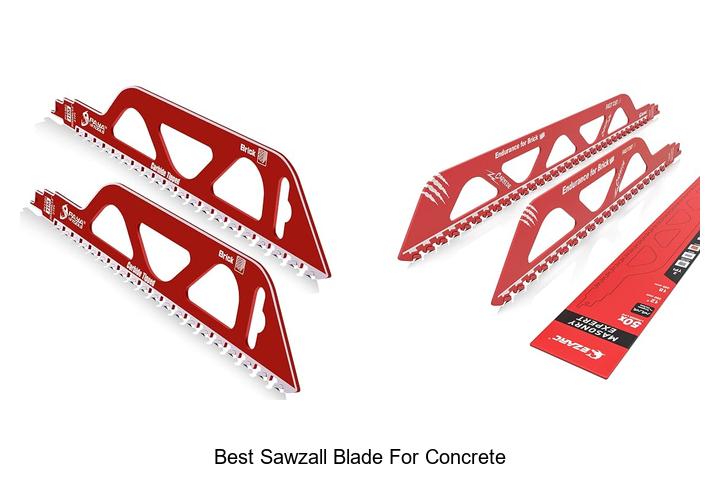
1. Masonry Reciprocating Saw Blade, 12-Inch, 2-Pack
Cut through masonry materials with ease using the Masonry Reciprocating Saw Blade, 12-Inch, 2-Pack by PAYA TOOLS. Crafted to handle tougher jobs, these blades deliver precision and durability that surpasses standard sawzall blades. Ideal for professionals and DIYers tackling brick and concrete projects.
Ideal for professionals and DIYers tackling brick and concrete projects.
Engineered specifically for masonry tasks, these blades feature a carbide tooth strip to ensure longevity and consistent cutting power. Designed to minimize vibration, they offer a smooth experience that reduces fatigue during extended use.
The PAYA TOOLS Masonry Sawzall Blades excel in straight, accurate cuts through brick, porous concrete, limestone, and cement composite boards. Their robust blade thickness and large teeth allow for quicker and straighter cuts while maintaining stability. Each 12-inch blade fits any reciprocating saw with a 1/2 inch shank, enhancing compatibility with various brands.
Each 12-inch blade fits any reciprocating saw with a 1/2 inch shank, enhancing compatibility with various brands.
Durability is reinforced by high-quality carbide teeth that resist wear when cutting tough materials where conventional bi-metal blades fail. They generate less dust due to optimized weight and design, creating a cleaner work environment. However, these blades are not suitable for cutting reinforced concrete, hard rocks, or stone, making them best for specific masonry applications.
However, these blades are not suitable for cutting reinforced concrete, hard rocks, or stone, making them best for specific masonry applications.
Overall, the sawzall blades provide reliable performance with reduced vibration and minimal dust output. Their 2-pack offering ensures spare blades are always on hand, making them a practical choice for both heavy-duty and frequent use scenarios.
Pros
- Carbide tooth strip delivers exceptional durability and sharpness
- Compatible with all reciprocating saws featuring a 1/2 inch shank
- Reduces vibration and dust for a cleaner, more comfortable cut
Cons
- Not suitable for reinforced concrete or very hard rock materials
These masonry reciprocating saw blades combine strength and precision to handle specific concrete and masonry cutting tasks. Their optimized design improves user comfort and efficiency, proving to be a dependable addition to any toolkit focused on brick and porous concrete cutting needs.
2. EZARC Carbide Reciprocating Saw Blades for Aerated Concrete, 2-Pack
Cutting through aerated concrete and masonry materials demands precision and durability. EZARC Carbide Reciprocating Saw Blades offer a reliable solution designed specifically for porous concrete and hollow bricks.
Experience smoother cuts with blades built to withstand tough cutting jobs.
These sawzall blades combine specialized carbide teeth technology with a robust design. Ideal for both professional builders and serious DIYers, they provide exceptional performance where conventional blades fall short.
EZARC’s blades are engineered to tackle aerated concrete, fiber cement, and drywall efficiently. The carbide tooth strip ensures remarkable cutting endurance and improves lifespan over typical bi-metal blades.
Stability is crucial for accurate work, and these blades maintain it even under heavy use. The dust-reducing design results in cleaner work areas, allowing for safer and quicker operations. Compatibility with all major sawzall brands makes switching blades hassle-free.
Compatibility with all major sawzall brands makes switching blades hassle-free.
Available in a convenient 2-pack with varied sizes, users can adapt to different cutting needs without changing tools. These blades are well-suited for professionals who demand reliable, long-lasting performance and anyone tackling rough masonry materials.
Pros
- Durable carbide teeth provide excellent cutting longevity in masonry.
- Designed to reduce dust for a cleaner and more efficient cutting experience.
- Wide-body construction ensures stability and precision during heavy-duty tasks.
Cons
- Not recommended for cutting stones, hard rocks, or cement blocks.
EZARC Carbide Reciprocating Saw Blades deliver focused performance for specific masonry materials. Their durability and clean cut advantage make them a practical choice where heavy-duty, reliable blades are required. For those working with aerated concrete or hollow bricks, these blades stand out as a trusted tool option.
For those working with aerated concrete or hollow bricks, these blades stand out as a trusted tool option.
3. 2-Piece 6 inch Diamond-Grit Edge Reciprocating Saw Blade
Cut through tough materials with confidence using the 2-Piece 6 inch Diamond-Grit Edge Reciprocating Saw Blade set. Designed to handle demanding jobs, these blades deliver remarkable durability for extended use on cast iron, masonry, and fiber cement.
Their diamond grit edge ensures a strong performance where standard blades often fall short.
Ideal for both professional tasks and DIY projects, the 6-inch length provides extra reach in tight spaces. These saw blades combine precision with speed to tackle heavy-duty cutting efficiently, making them essential additions to any toolkit focused on concrete and other dense materials.
Crafted with reinforced-body construction, these blades offer outstanding toughness without sacrificing control. The thin kerf design facilitates faster cuts while maintaining clean, accurate results across thick, challenging surfaces. They fit universally with any reciprocating saw featuring a 1/2 inch shank, providing broad device compatibility.
Users will appreciate the diamond grit edge that lasts up to six times longer than standard options. Its robustness shines when working with diverse materials like fiberglass and fiber cement, expanding versatility. This set is recommended for home repair enthusiasts and professionals who demand efficient, reliable cutting tools built to withstand tough applications.
This set is recommended for home repair enthusiasts and professionals who demand efficient, reliable cutting tools built to withstand tough applications.
Compared to ordinary blades, these saw blades stand out by combining longevity with cutting precision. They reduce the need for frequent replacements, saving time while maintaining performance quality.
Overall, these blades are a practical, high-performing solution for concrete-related cutting tasks and other thick materials.
Pros
- Diamond grit edge offers up to 6 times longer life than standard blades
- 6-inch length provides extended reach for cutting in confined spaces
- Thin kerf design allows fast, clean cuts with great precision
Cons
- Limited to reciprocating saws with a 1/2 inch shank size
For anyone needing durable, efficient blades capable of handling concrete and other challenging materials, this 2-piece diamond-grit saw blade set is a reliable choice. Its combination of longevity, precision, and versatile compatibility supports smooth and effective cutting performance.
4. MRCGTCE 12-Inch Masonry Reciprocating Saw Blade, 2 TPI Tungsten Carbide Teeth Tipped

Enhance your masonry cutting projects with the MRCGTCE 12-Inch Masonry Reciprocating Saw Blade. Engineered to handle tough demolition tasks, it features robust tungsten carbide teeth designed for durability and precision.
Built to withstand demanding conditions, the saw blade combines strength and advanced materials. Its design allows for quick, clean cuts on bricks, cement, and other soft stone materials.
The MRCGTCE blade offers excellent versatility, suitable for cutting through red brick, fiber cement, porous concrete, and mortar with confidence. The 2 TPI tungsten carbide teeth provide superior wear resistance, surpassing conventional materials to keep the blade sharper longer. A strong steel backing reinforces the blade against bending during heavy-duty performance.
A strong steel backing reinforces the blade against bending during heavy-duty performance.
Its large tooth pitch enhances cutting efficiency, reducing time spent on demanding projects. Compatible with most major reciprocating saw brands, installation is straightforward, making it a reliable upgrade for professionals and DIYers alike.
The blade body is crafted from high carbon steel to optimize strength and flexibility for various cutting needs.
Unlike blades designed for harder materials, this saw blade should not be used on hard concrete, metal, or wood with nails. Its specialization on masonry ensures clean, precise cuts without unnecessary wear. Overall, the blade balances durability, performance, and ease of use, making it suitable for contractors and serious home renovators working on abrasive materials.
Overall, the blade balances durability, performance, and ease of use, making it suitable for contractors and serious home renovators working on abrasive materials.
Pros
- Durable tungsten carbide teeth deliver extended wear resistance
- Designed specifically for efficient cutting of mortar, brick, and porous concrete
- Universally compatible with major reciprocating saw brands
Cons
- Not suitable for cutting hard concrete, metal, or wood with nails
The MRCGTCE 12-Inch Masonry Reciprocating Saw Blade stands out for its durability and cutting precision on softer masonry materials. It offers an excellent balance of strength and efficiency, making it a smart choice for users focused on masonry demolition. For those needing a blade specialized in abrasive materials, this option combines quality with broad compatibility.
For those needing a blade specialized in abrasive materials, this option combines quality with broad compatibility.
5. 10 Inch Masonry Reciprocating Saw Blades Concrete Saw Blade Alloy Demolition Masonry

Experience superior cutting performance with the 10 Inch Masonry Reciprocating Saw Blades Concrete Saw Blade Alloy Demolition Masonry. Designed for heavy-duty demolition and construction work, this blade delivers clean, precise cuts while minimizing dust.
Built to meet the demands of rigorous jobs, the blade combines high-quality carbide steel for exceptional hardness and wear resistance. The thickened blade paired with a large tooth pitch reduces vibration and dust generation, allowing more controlled and effective cutting.
Additionally, the universal handle design enhances compatibility across a wide range of saw models, offering versatility on any job site.
Constructed for durability, the blade withstands intense use without compromising performance. Carbide steel ensures a longer lifespan, even under tough conditions. Its weight-optimized frame minimizes vibration, promoting comfort during extended cutting sessions and improving accuracy.
Its weight-optimized frame minimizes vibration, promoting comfort during extended cutting sessions and improving accuracy.
Ease of use is another strong point with a design that fits various cordless and electric reciprocating saws. This adaptability caters to professionals and DIY users needing a reliable cutting accessory.
Compared to similar options, this blade stands out for its balance between toughness and user-friendly features. The overall design focuses on reducing operator fatigue while maintaining consistent cutting quality.
Pros
- High-quality carbide steel offers excellent durability and wear resistance
- Thickened blade with extra-large tooth pitch reduces dust and vibration
- Universal handle design fits various saw types for versatile use
Cons
- May wear faster under extremely heavy or continuous use
A dependable choice for both professionals and DIY users, these blades bring together durability, clean cutting, and comfort. Their design suits a broad range of saws, making them an efficient addition to your toolset for concrete and masonry work.
6. Masonry Reciprocating Saw Blade
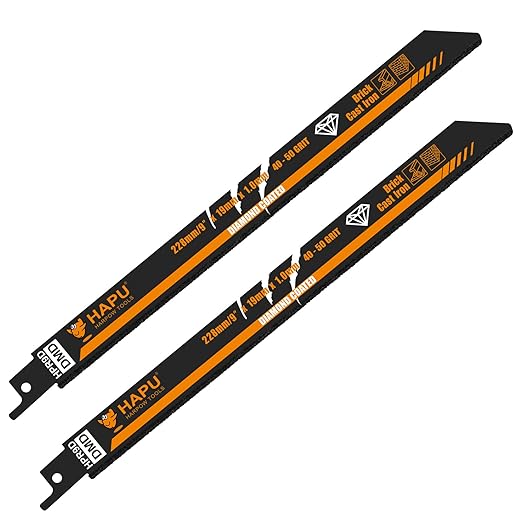
Experience superior cutting performance with the Masonry Reciprocating Saw Blade designed for demanding materials. Its diamond grit edge dramatically extends blade life while delivering precision cuts on tough surfaces like cast iron and masonry. This blade redefines durability and efficiency for heavy-duty saw applications.
Designed to reach confined spaces, the 9-inch blade offers excellent control and stability for intricate tasks. Compatible with any reciprocating saw sporting a 1/2 inch shank, it’s a versatile tool for both professionals and DIY home projects. Count on a smooth cutting experience paired with long-lasting results.
The blade features a diamond-grit edge that lasts up to six times longer than typical blades. It tackles dense materials such as cast iron, fiber cement, and fiberglass without losing sharpness.
Its reinforced body enhances durability during heavy-duty cutting, making it suitable for robust applications.
At 9 inches long, the blade extends your reach into tight or awkward spaces, expanding your working capabilities. The thin kerf design accelerates material removal while maintaining precision and clean edges. This balance reduces effort and enhances overall cutting speed.
Compatibility is universal for all reciprocating saws with a 1/2 inch shank, letting you seamlessly integrate this blade into your existing toolkit. Whether for home renovation or professional repair, it combines efficiency, toughness, and value for money in a compact package.
Pros
- Diamond grit edge lasts up to 6x longer than standard blades
- 9-inch length allows access to confined and hard-to-reach areas
- Universal fit compatible with all 1/2 inch shank reciprocating saws
Cons
- May wear faster when used on extremely abrasive materials beyond intended scope
For those seeking a durable blade that handles multiple tough materials efficiently, the Masonry Reciprocating Saw Blade offers dependable performance. Its extended lifespan and practical size make it a valuable addition to any tool collection, outperforming many standard reciprocating saw blades in endurance and precision.
7. TOLESA Carbide Reciprocating Saw Blade, 12-Inch 2TPI for Masonry, 1-Pack

Experience precision and durability with the TOLESA Carbide Reciprocating Saw Blade. Designed specifically for masonry cutting, this 12-inch blade offers exceptional performance on materials like aerated concrete and hollow bricks.
Built to withstand demanding conditions, the TOLESA blade combines fast cutting capabilities with long-lasting strength. Perfect for homeowners and professionals, it fits most major reciprocating saw brands for versatile use across various projects.
The TOLESA Carbide Reciprocating Saw Blade stands out with its high-performance carbide teeth strip. These teeth provide excellent durability, allowing clean cuts through porous masonry materials.
Constructed with a wide-body design and thick gauge steel, the blade offers stability and resists bending. Brazed carbide teeth further enhance its cutting power, ensuring consistent performance over time. Note that it works best with materials like aerated concrete and hollow bricks but is not suitable for hard rocks or cement blocks.
Note that it works best with materials like aerated concrete and hollow bricks but is not suitable for hard rocks or cement blocks.
Compatibility is broad, as the blade fits all major reciprocating saw brands including DeWalt, Makita, Ridgid, Milwaukee, and more. This versatility makes it a practical addition for both DIYers and professionals seeking reliable cutting tools.
Pros
- Durable carbide teeth provide long-lasting cutting performance
- Fast chip removal with 2TPI serrations boosts cutting speed by 50%
- Wide-body design enhances blade stability during cuts
Cons
- Not suitable for cutting hard rocks, cement blocks, or fine branches
Combining durability, fast cutting, and broad compatibility, the TOLESA Carbide Reciprocating Saw Blade excels in masonry applications. Its specialized design offers reliable performance that meets the demands of various cutting tasks, making it a smart choice for users needing an efficient concrete sawzall blade.
8. 3 Pack 9 inch 40-50 Diamond-Grit Reciprocating Saw Blade

Durable and versatile, the 3 Pack 9 inch 40-50 Diamond-Grit Reciprocating Saw Blades are engineered for tackling the toughest cutting tasks. Crafted with industrial-grade diamond grit, these blades promise extended lifespan and powerful cutting through dense materials.
These saw blades reduce cutting time and effort, making them a reliable choice for both professionals and serious DIYers working with concrete, brick, and cast iron. Their universal design fits most major reciprocating saw brands, offering broad compatibility without sacrificing performance.
Engineered for strength and precision, these Reciprocating Saw Blades excel at slicing through cast iron pipes, brick, fiber cement, and fiberglass thanks to their diamond-coated edges. The grit not only enhances blade durability but also minimizes binding and material waste during cuts.
A rigid core design keeps vibrations and blade deflection to a minimum, offering steady, accurate cuts even on demanding materials. This stability enhances control, making it easier to handle tight spaces and intricate cuts. Their universal compatibility allows use on popular saw brands like Bosch, DeWalt, Milwaukee, and Makita, adding convenience and flexibility for various tool setups.
Their universal compatibility allows use on popular saw brands like Bosch, DeWalt, Milwaukee, and Makita, adding convenience and flexibility for various tool setups.
Compared to standard blades, these diamond-grit alternatives last up to eight times longer, which reduces downtime and the frequency of blade replacements. They are an ideal option for contractors or DIY users seeking durability and efficiency when working on masonry or dense construction materials.
Pros
- Industrial-grade diamond grit ensures exceptional durability and long blade life
- Minimizes binding and material waste for smoother, quicker cuts
- Rigid core reduces vibration, providing steady and precise performance
Cons
- Blade length (9 inch) may be too long for very tight or small cutting spaces
Offering enhanced durability and versatile use across multiple saw brands, these diamond-grit blades provide consistent, reliable cutting power. They stand out for projects requiring long-lasting performance on hard materials, making them a worthy addition to any heavy-duty tool kit.
9. Lenox 8-in Grit-Tpi Diamond Grit Reciprocating Saw Blade

Cutting through tough materials just became easier with the Lenox 8-in Grit-Tpi Diamond Grit Reciprocating Saw Blade. Designed to keep its edge longer, this blade handles hard surfaces that typically wear down standard blades quickly. Its precise engineering offers fast and efficient cuts for demanding projects.
Whether working with stone, brick, or cast iron, this saw blade delivers stability and durability. It is built to tackle a variety of construction and renovation tasks with consistent performance. Ideal for professionals and DIY users who value reliability.
The diamond brazed particles on the blade maintain sharpness well beyond the lifespan of traditional carbide grit blades. This keeps cutting consistent without frequent blade changes, saving time and effort. The blade’s narrow kerf enables thinner and faster cuts, reducing material waste and increasing precision for detailed work.
The blade’s narrow kerf enables thinner and faster cuts, reducing material waste and increasing precision for detailed work.
Its durable chrome alloy backing steel provides additional stability, preventing bending and breaking during heavy-duty use. The blade performs well when cutting through cast iron, tile, brick, and natural stone. Quick and clean cuts improve overall efficiency on job sites or home projects.
Quick and clean cuts improve overall efficiency on job sites or home projects.
Lenox includes a warranty reflecting confidence in its construction quality. Users report high satisfaction with its sharpness retention and cutting speed. This blade works best for professionals needing durability and DIY enthusiasts requiring dependable results over multiple uses.
This blade works best for professionals needing durability and DIY enthusiasts requiring dependable results over multiple uses.
Pros
- Nickel alloy brazed diamond particles keep the blade sharp longer
- Narrow kerf design allows for faster and more precise cuts
- Durable chrome alloy backing steel enhances blade stability
Cons
- Single blade in package – may require purchasing multiples for larger projects
This saw blade represents excellent value for those needing a reliable solution for cutting concrete, stone, and similar tough materials. Compared to many standard blades, it offers longer life and enhanced cutting speed.
Things to Consider Before Buying the Best Sawzall Blade for Concrete
Blade Material and Durability
Carbide vs. bimetal blades. Resistance to wear and tear. Heat dissipation properties.The difference between carbide and bimetal blades plays a significant role in how well a sawzall blade performs with concrete. Carbide blades often excel in resistance to wear and tear due to their hard, abrasive-resistant tips that maintain sharpness over extended periods of use.
Heat dissipation properties affect durability as well; blades that efficiently dissipate heat tend to last longer because excessive heat can dull edges and weaken the structure. In general, blades designed to manage heat effectively help prevent warping or loss of cutting efficiency when cutting dense materials like concrete.
Understanding how these factors influence the lifespan and performance of a blade can guide decisions around which option holds up best under heavy-duty conditions.
Blade Tooth Design and Configuration
Tooth size and count (TPI). Tooth geometry for concrete cutting. Impact on cutting speed and smoothness.The effectiveness of cutting concrete depends largely on the tooth size and count, often measured in teeth per inch (TPI). Blades with fewer, larger teeth tend to cut through tough materials like concrete more quickly but may result in a rougher finish. Conversely, a higher tooth count provides a smoother cut but can reduce the speed of cutting.
Conversely, a higher tooth count provides a smoother cut but can reduce the speed of cutting. The geometry of the teeth plays a significant role as well, with specific designs optimized to handle the density and abrasiveness of concrete. Teeth shaped to chip away at concrete particles while maintaining durability contribute to both the efficiency and longevity of the blade.
The balance between tooth size, count, and geometry affects how clean and fast a cut will be, making these features pivotal depending on whether speed or precision is the priority for a particular job.
Compatibility with Sawzall Models
Universal fit vs. brandspecific blades. Blade shank size and attachment type. Ease of installation and removal.Blades designed for sawing through concrete come in various styles that impact how they fit and perform with different sawzall models. The comparison between universal fit and brand-specific blades often centers on the range of tools they can be used with; universal blades tend to accommodate multiple brands thanks to a common shank size and attachment design, providing versatility. Brand-specific blades might offer a more tailored fit that can enhance stability and minimize wobble during operation, but they may only work with certain models.
Brand-specific blades might offer a more tailored fit that can enhance stability and minimize wobble during operation, but they may only work with certain models. The size and type of the blade shank play a significant role in compatibility since most sawzalls use either a half-inch or a smaller shank, which affects how securely the blade attaches and whether adapters are necessary. Ease of installation and removal depends largely on the tool’s blade clamp mechanism as well as the blade design itself; some blades fit snugly without tools, while others require a key or additional equipment to change.
Understanding these factors helps in pairing a blade that works smoothly and safely with a particular sawzall model, offering an efficient cutting experience with minimal hassle.
Blade Length and Thickness
Choosing appropriate length for cutting depth. Thickness for stability vs. flexibility. Effects on maneuverability and control.The length of a sawzall blade plays a key role in how deep it can cut through concrete, with longer blades allowing for greater cutting depth, which is especially useful for thicker or larger materials. Blade thickness impacts performance by influencing the balance between stability and flexibility; a thicker blade generally provides better control and reduces bending during heavy-duty cutting, while a thinner blade offers improved maneuverability, allowing for tighter turns and more precise cuts.
Considering how these factors affect handling, a blade that is too thick might feel cumbersome in tight spaces, whereas a blade that is too thin could wobble or break under pressure. Finding the right balance between length and thickness helps maintain control and efficiency, making the cutting process smoother and more accurate when working with concrete.
Performance and Cutting Efficiency
Speed of cutting through concrete. Reduction of dust and debris. Vibration and noise levels during operation.The speed of cutting through concrete greatly impacts how efficiently a project progresses, with blades designed for concrete often featuring specially engineered teeth and materials that slice through tough surfaces quickly without unnecessary wear. Managing the reduction of dust and debris during cutting is another significant aspect, as less airborne dust creates a safer environment and minimizes cleanup time after use.
Together, these aspects contribute to a smooth cutting experience that balances power and precision while addressing practical concerns related to safety and ease of use.
Price and Warranty Considerations
Cost vs. quality balance. Availability of replacement blades. Warranty and satisfaction guarantees.Balancing cost and quality plays a significant role when considering sawzall blades designed for cutting concrete. Selecting a blade that provides durability and efficient cutting performance without overspending can save both time and money in the long run.
The ease of finding replacement blades also contributes to maintaining workflow; widely available blades from reputable brands tend to offer more options and quicker access, reducing downtime. Additionally, warranties and satisfaction guarantees offer peace of mind, as they reflect the manufacturer’s confidence in the blade’s longevity and effectiveness. Reliable warranty coverage can protect against manufacturing defects and premature wear, helping to justify the initial investment while supporting consistent project outcomes.
FAQ’s
What Features Should I Look For In The Best Sawzall Blade For Cutting Concrete?Look for a Sawzall blade made with carbide grit or diamond grit for durability and efficient cutting of concrete. Additionally, choose a blade with a wider, reinforced body and an aggressive tooth design to ensure faster, cleaner cuts.
Which Materials Are The Top Sawzall Blades Designed To Cut Through Concrete Effectively?Top Sawzall blades designed to cut through concrete effectively are typically made with carbide teeth or embedded with diamond grit. These materials provide the durability and strength needed to handle the hardness and abrasiveness of concrete.
How Do Diamond-Tipped Sawzall Blades Compare To Carbide Grit Blades For Concrete Cutting?Diamond-tipped Sawzall blades offer faster and cleaner cuts in concrete due to the hardness and precision of the diamond edges, making them ideal for tougher materials. In contrast, carbide grit blades are generally more affordable and better suited for lighter, less demanding concrete cutting tasks but may wear out more quickly.
What Are The Recommended Blade Sizes And Tooth Configurations For Sawzall Blades Used On Concrete?Recommended Sawzall blades for cutting concrete typically have a length of 6 to 12 inches with carbide-grit or diamond-grit teeth configurations. These blades often feature a coarse tooth design or grit coating to efficiently cut through tough concrete materials.
Can Sawzall Blades Designed For Concrete Be Used On Other Materials, Like Masonry Or Brick?Yes, Sawzall blades designed for concrete can typically be used on other similar materials like masonry or brick, as they are built to handle tough, abrasive surfaces. However, for optimal performance and blade longevity, it’s best to use blades specifically designed for each material type.
Conclusion
Choosing the best sawzall blade for concrete depends on balancing durability, cutting speed, and versatility. Blades designed specifically for concrete typically feature carbide grit or diamond coatings, allowing them to handle tough materials without wearing down quickly.
These blades work best for professionals and DIYers who frequently cut through concrete, masonry, or similar materials and need reliable performance. For occasional users, a more budget-friendly option may suffice but could require more frequent replacements.
Overall, selecting the right sawzall blade for concrete comes down to matching the blade’s features with your project demands, offering a practical solution that saves time and effort without compromising quality.