Top 12 Best Nonstick Pressure Cooker That Will Shock You
Anyone who’s tried cooking with a pressure cooker that sticks knows how quickly frustration sets in. A cheap or poorly made unit can leave burnt food in the pot’s base, scrap off its coating, and make cleanup a chore.
Finding the best nonstick pressure cooker means choosing something that will actually prevent food from clinging, saving time and avoiding ruined meals.
Key factors include the quality of the nonstick coating, which should be durable and typically PTFE-based for easy release. The cooking pot should hold a practical capacity, usually between 6 to 8 quarts, to fit various family sizes. Reliable pressure settings and secure locking lids are essential for safety and consistent results.
A removable inner pot also makes washing easier, especially when the nonstick surface is well-applied and resists scratches.
Need a Quick Check?
| Image | Product | Price |
|---|---|---|
Our Top Picks 1  | Hawkins Contura 3L | Check Price |
Our Top Picks 2 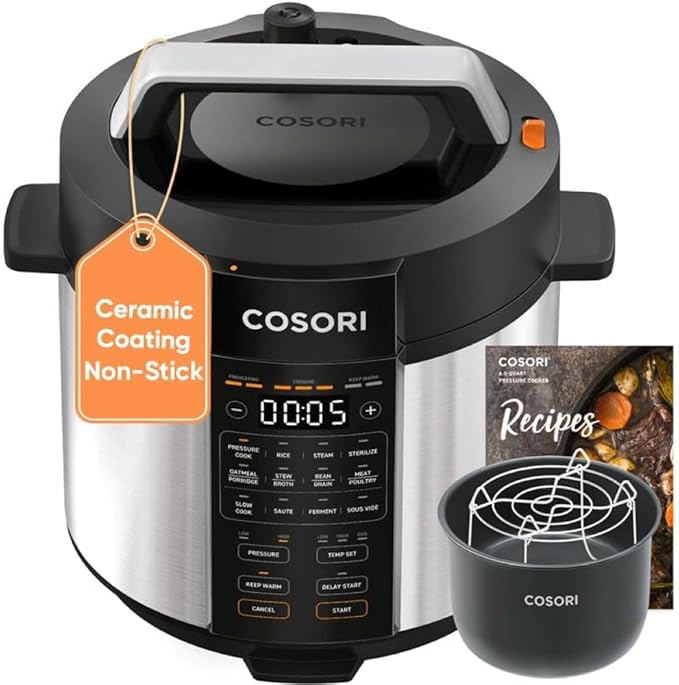 | Cosori 6QT Pressure Cooker | Check Price |
Our Top Picks 3  | Hawkins Ceramic 5L | Check Price |
Our Selected Top 12 Nonstick Pressure Cooker for Different Needs
This list features a variety of nonstick pressure cookers designed for different cooking needs and preferences. Each review highlights performance, suitability for various users, and the main advantages and drawbacks to help readers make an informed choice.
1. Hawkins Contura Hard Anodized Pressure Cooker 3L
Hard anodized construction makes this pressure cooker stand out for people cooking for 3 to 4 individuals. Its thick base keeps things steady on the stove, which is great for even cooking and durability.
Setting it up is simple with a manual operation mode and hand control. The inner and outer lids provide a secure seal, giving confidence while cooking.
Works on electric, gas, and induction stoves, which keeps it flexible in most kitchens.
The cooker heats quickly and distributes heat evenly thanks to its 4.88 mm thick base. Its sturdy build avoids bulging over time, which maintains stability.
Most users appreciate how well it holds heat and delivers consistent cooking; some mention it’s a bit heavy for daily use.
People frequently praise the flat, thick base for fast, even cooking and the ability to avoid bulging over time. The most common downside mentioned is the cooker’s substantial weight, which can make handling it less convenient during and after cooking.
Anyone looking for a sturdy pressure cooker with versatile stovetop use and reliable heat retention will appreciate this model. Those preferring a lighter or fully automated option may want to explore other choices better suited for ease and speed of control.
Pros
- Extra thick base prevents bulging and warping
- Compatible with multiple stovetop types
- Retains heat for consistent cooking
- Safe inner and outer lid closure system
Cons
- Relatively heavy to handle during cooking
- Manual operation may require a learning curve
| Specification | Details |
|---|---|
| Capacity | 3 Liters |
| Base Thickness | 4.88 mm |
| Compatibility | Electric, Gas, Induction |
| Control Method | Touch |
| Voltage | 230 volts |
2. Cosori 6QT Pressure Cooker
Quick and versatile, the Cosori 6QT Pressure Cooker suits anyone looking for one pot that does it all. Its biggest strength lies in handling multiple cooking tasks, from pressure cooking to sous vide, making it ideal for busy kitchens where space and time are limited.
Setup is straightforward; aligning the orange dots locks the lid securely. Day-to-day use is easy thanks to the touch control panel and 13 preset cooking modes like Rice, Stew, and Slow Cook. Venting is safer with the steam release angled backward and separate seal/vent buttons.
Cleanup is simple because the ceramic-coated inner pot and dishwasher-safe accessories keep things neat without heavy scrubbing.
Performance is reliable across its nine cooking functions, maintaining even heat without sticking, thanks to the non-stick ceramic coating. It’s built with a fingerprint-resistant stainless steel housing that resists smudges and a widened pot gap that helps prevent spills. Praised for its safety features, especially during steam release, some mention the manual-control buttons as less intuitive compared to fully digital models.
Most praise centers on the safety of the venting system and the ease of cleaning with the ceramic coating. The common complaint regards the manual-control buttons, which can feel less responsive than expected during operation. The locking lid also needs accurate alignment, or it won’t seal properly.
This cooker will make those who want a flexible and safe kitchen tool very happy, especially where multiple cooking styles are needed. For users who prefer fully digital controls or a simpler lid mechanism, other models may be a better fit.
Pros
- Multiple preset functions for versatile cooking
- Ceramic non-stick inner pot simplifies cleaning
- Safer venting design reduces steam risk
- Fingerprint-resistant stainless steel housing
Cons
- Manual-control buttons less user-friendly
- Lid locking mechanism requires careful alignment
| Specification | Details |
|---|---|
| Special Features | 13-in-1 Cooking Presets, 9-in-1 Cooking Functions |
| Control Method | Touch |
| Wattage | 1100 watts |
| Closure Type | Outer Lid |
| Operation Mode | Automatic |
3. Hawkins Ceramic Nonstick Pressure Cooker 5L
Want a pressure cooker that makes meals tastier using less oil? The Hawkins Ceramic Nonstick Pressure Cooker 5L suits families of 5 to 7 with its durable German ceramic coating that resists high heat and offers excellent food release. Its standout feature is the ceramic nonstick surface that avoids harmful substances while delivering crispier results.
Setting up the cooker is straightforward thanks to the manual operation and hand control. The inner lid closure feels secure and contributes to safe pressure cooking. Everything feels sturdy but not too heavy to handle daily.
Cleaning is simpler since the ceramic surface doesn’t stick, needing less oil for cooking. Touch control ensures precision in cooking without fuss.
The cooker handles pressure cooking well, making meals quickly while keeping flavors intact. The high-quality ceramic lining lasts longer, maintaining its nonstick ability without peeling or damage from intense heat.
Most comments praise its cooking performance and easy cleanup. A common complaint points to the relatively low wattage value of 1 watt, which may affect heating times.
The cooker is praised for its excellent ceramic nonstick surface that cooks crisper, tastier meals and cleans easily. However, the low wattage rating of just 1 watt may cause slower heating compared to other models.
People wanting a durable, healthier nonstick cooker that fits a medium-sized family will find it suitable. Those needing faster cooking times or digital controls might prefer another model.
Pros
- High-quality ceramic coating lasts longer
- Manual touch controls for precise cooking
- Nonstick surface uses less oil
- Inner lid closure adds safety
Cons
- Very low wattage value
- Only manual operation available
| Specification | Details |
|---|---|
| Capacity Suitability | 5 to 7 Persons |
| Nonstick Inside Material | German Ceramic |
| Control Method | Touch |
| Operation Mode | Manual |
| Closure Type | Inner Lid |
| Wattage | 1 watts |
4. Hawkins Ceramic Nonstick Pressure Cooker 3L

Cooking for a small family becomes easier with a pressure cooker that keeps food from sticking and uses less oil. Designed to suit 3 or 4 persons, it offers a ceramic nonstick interior that excels at releasing food and resists damage from high heat.
Its biggest strength lies in cooking crispy, tasty meals while staying healthy and safe.
Setting it up requires manual operation with a hand control and an inner lid closure, making it straightforward to use during everyday cooking. The ceramic nonstick coating means less oil is needed, and cleaning doesn’t demand a lot of scrubbing.
German ceramic inside ensures durability for daily use, standing up well to regular heat without wear.
The cooker performs well in preparing meals with a crisp finish due to its heat resistance. It feels sturdy thanks to the high-quality ceramic that lasts longer, which makes cooking more enjoyable. Its main downside noted is the simplicity of manual controls, which some might find a bit basic compared to electronic alternatives.
Many reviews highlight the ceramic coating’s excellent release properties and its ability to cook crispier dishes. The main complaint focuses on the manual controls, which can feel basic compared to more advanced electric pressure cookers.
People who want a reliable, safe nonstick cooker with manual operation will appreciate this model. Those looking for digital controls or larger capacity might want to explore other options.
Pros
- Excellent food release with ceramic nonstick inside
- Can cook crispier, tastier meals
- High-quality German ceramic lasts longer
- No PFAS or heavy metals
Cons
- Only manual control, no automation
- Wattage and voltage data unusual (1 watts, 1 volts)
| Specification | Details |
|---|---|
| Capacity | 3L |
| Special Features | Manual |
| Control Method | Touch |
| Operation Mode | Manual |
| Closure Type | Inner Lid |
| Controller Type | Hand Control |
5. Instant Pot Duo Electric Pressure Cooker 6QT

Pressure cooking meals up to 70% faster makes this 6-quart cooker a solid choice for busy kitchens. Suited well for those who want a versatile appliance without clutter, it handles everything from rice to yogurt with a simple one-touch control system.
Setup is straightforward thanks to programmable touch controls and an inner and outer lid design that locks securely. The fingerprint-resistant stainless steel sides stay cleaner looking longer, and the dishwasher-safe parts like the lid and pot make cleaning quick after cooking multiple dishes.
Performance is reliable, with 13 smart programs covering a wide range of recipes. The nonstick inner pot is PFOA/PTFE-free, offering safer cooking and easy food release.
Some users find the digital display less intuitive at first, but the build quality impresses with solid stainless steel and a secure closure system.
Many people love how fast it cooks and the variety of smart programs that make one-pot meals easy to prepare. On the downside, some find the touch control interface confusing initially, requiring a bit of patience to master.
Anyone needing a multi-use cooker with easy cleanup will find this a practical tool. People who want larger capacity options or prefer more traditional control knobs might want to explore other models.
Pros
- Seven cooking functions in one appliance
- Nonstick inner pot free of PFOA/PTFE
- Dishwasher-safe lid and pot for easy cleanup
- Fingerprint-resistant stainless steel exterior
Cons
- Digital controls take getting used to
- Only one size option at 6 quarts
| Specification | Details |
|---|---|
| Wattage | 1000 watts |
| Control Method | Touch |
| Operation Mode | Automatic |
| Voltage | 120 |
| Closure Type | Inner Lid, Outer Lid |
| Special Features | Programmable |
6. Hawkins Contura Hard Anodised Pressure Cooker 2L

People who cook every day and want a reliable, small pressure cooker for easy meals will appreciate this 2L option. It fits well in small kitchens and is known for saving time while maintaining healthy cooking.
Its biggest strength lies in hard anodized construction that heats up quickly and lasts long.
Setting it up is straightforward with the outer lid and manual hand control. The curved body helps stir ingredients without scraping the sides. It works smoothly on both electric and gas stovetops.
The pressure regulator keeps an eye on the pressure inside, providing steady cooking without surprises.
Performance is solid for its size, handling pressure cooking efficiently thanks to the fast heat absorption from the hard anodized aluminum body. The build feels sturdy and resistant to corrosion. Most praise highlights its durability and ease of stirring food, while occasional comments mention handling small food quantities only.
The pressure regulator consistently maintains stable pressure for safe cooking, praised often in reviews. The small size limits batch cooking, which some find restrictive for larger meals or families. Its corrosion-resistant body handles daily use well, keeping the cooker looking new over time.
Anyone cooking for one or two and seeking quick, healthy pressure cooking will appreciate this cooker. Those needing larger capacities or automatic controls may want to consider bigger or electric options instead. Its build and compatibility suit everyday kitchen use nicely.
Pros
- Durable hard anodised aluminum body
- Compatible with electric and gas stovetops
- Curved design for easier stirring
- Efficient heat absorption saves energy
Cons
- Small 2L capacity limits batch size
- Manual operation may require more attention
| Specification | Details |
|---|---|
| Capacity | 2L |
| Material | Hard Anodised Aluminum |
| Pressure Control | Improved pressure regulator |
| Compatibility | Electric Stovetop Compatible, Gas Stovetop Compatible |
| Closure Type | Outer Lid |
| Control Method | Touch (Manual Operation) |
7. Ninja HyperHeat Pressure Cooker 6.5QT

Unique for speeding up meals, this Ninja HyperHeat Pressure Cooker handles nine cooking functions in one unit. It suits those who value variety and want to save time in the kitchen, with the real advantage being its quick pressure build-up to make dinner faster compared to slow cooking methods.
Setup requires little effort; the push-button controls are straightforward for both manual and automatic modes. Daily use benefits from its ability to sear and sauté directly in the pot, cutting down on extra pans and dishes. The keep warm setting adds convenience, allowing meals to stay ready without overcooking while you finish other tasks.
It delivers well on speed and versatility, cutting cooking time significantly. The build feels solid and practical, with a large cooking surface for meal prep in one pot.
Praised mainly for reducing wait times, some users find the 1200-watt power a bit limiting for very large meals or heavy-duty use.
The quick pressure buildup is praised for cutting meal times, making this ideal for busy households. A common frustration comes from the wattage being less powerful than some might need for larger or tougher cooking tasks.
People who want a multi-functional cooker that speeds up everyday meals will appreciate this. Those regularly cooking large quantities or requiring very high heat might prefer a different model with more power.
Pros
- Heats up pressure quickly to save cooking time
- Large cooking surface for searing and sautéing
- Simple push-button controls for ease of use
- Multiple cooking options in one appliance
Cons
- Some find 1200 watts limits heavy or large meal cooking
- Outer lid closure may feel bulky to handle
| Specification | Details |
|---|---|
| Capacity | 6.5QT |
| Power | 1200 watts |
| Control Method | Push Button |
| Operation Modes | Manual and Automatic |
| Functions | 9-in-1 multi cooker (pressure cook, slow cook, rice, sous vide, steam, sear/sauté, yogurt and more) |
| Voltage | 120 volts |
8. Chefman Electric Pressure Cooker 6QT

Chefman Electric Pressure Cooker 6QT stands out for its wide range of functions in one device. Ideal for busy households, it handles everything from pressure cooking to slow cooking, making everyday meals quicker and more diverse with one appliance.
Setup involves plugging in and selecting one of 13 preset cooking functions, including soup, stew, rice, and beans. Touch controls keep things simple, with quick or natural pressure release options for safety and convenience. The 6-quart size suits families or meal prepping without taking up too much counter space.
Pressure cooking delivers tender results faster than traditional methods, especially for meats and soups. The cooker’s build feels solid with a user-friendly interface. Most praise focuses on how much it speeds up meal prep, while occasional notes cite the need for careful attention during pressure release.
Many appreciate how this cooker reduces cooking time for everyday meals significantly. The most frequent concern is about carefully managing steam during pressure release to stay safe. Controls are generally intuitive, but the pressure release step demands focus.
People looking for a versatile kitchen helper with multiple preset functions will find this suitable. Those who rarely pressure cook or want a solely slow cooker might consider other options better tailored to those needs.
Pros
- 13 one-touch cooking functions
- Quick and natural pressure release options
- Automatic operation for ease of use
- 6-quart size suits families and meal prep
Cons
- Pressure release requires attention to avoid steam burns
- Some users find slow cook option less efficient
| Specification | Details |
|---|---|
| Special Features | 13 Cooking Functions |
| Wattage | 1000 watts |
| Control Method | Push Button |
| Operation Mode | Automatic |
| Voltage | 120 volts |
| Controller Type | Touch control |
9. Prestige Deluxe Duo Plus Aluminum Pressure Cooker

Cooking feels more controlled with the Prestige Deluxe Duo Plus, ideal for anyone seeking a reliable nonstick pressure cooker with versatile lid options. Its biggest strength is the combination of a stainless steel and glass lid, letting you both pressure cook securely and serve straight away with a view of your food.
Setup is straightforward, with durable handles making it easy to handle even when full. You get the choice of using either the locking stainless steel lid for pressure cooking or the glass lid to serve and check on your dishes without releasing heat. The induction-compatible base adds flexibility for various stove types, and a built-in ladle holder keeps utensils handy during cooking.
The cooker performs well, maintaining consistent pressure thanks to the locking lid and sturdy build. It has a hard anodized aluminum body that resists scratches and handles high heat effectively. The strongest compliment is its ability to cook evenly and quickly.
A common complaint centers on the manual operation mode being less intuitive than digital controls.
Many appreciate the hard anodized body and the dual-lid design for both pressure cooking and serving. Users frequently mention that manual controls could be improved for easier handling during cooking.
Those looking for a pressure cooker with simple, manual touch controls and durable build will find this a good match. People wanting fully digital operations or more advanced safety features might consider other options.
Pros
- Comes with stainless steel and glass lids
- Durable handles for safe handling
- Induction compatible for all stove types
- Ladle holder included for convenience
Cons
- Manual operation less user-friendly than digital
- Touch control may feel less precise
| Specification | Details |
|---|---|
| Special Features | Induction Compatible Base, Locking Lid |
| Wattage | 1000 watts |
| Control Method | Touch |
| Operation Mode | Manual |
| Closure Type | Inner Lid, Outer Lid |
| Controller Type | Hand Control |
10. COMFEE’ Pressure Cooker 6QT

Great for anyone needing a versatile yet safe nonstick pressure cooker, it shines with 13 preset cooking options. Ceramic coating keeps cooking healthier and cleanup easy, making it a solid choice for everyday home cooks focusing on convenience and safety.
Setup involves selecting from 13 programmable presets using a touch control and adjusting cooking with a mechanical knob. The locking lid ensures safe operation, while automatic pressure and temperature control handle the cooking process. Cleanup is straightforward thanks to the non-toxic, ceramic-coated pot that prevents sticking.
Cooking results consistently meet expectations across settings from meat to oatmeal, thanks to reliable pressure control and overheat protection. The ceramic coating feels durable against regular use, though some users mention the mechanical knob could be smoother.
It handles its job with few issues and stays easy to maintain.
Many users appreciate how the ceramic coating keeps food from sticking and makes cleanup simple. At the same time, the mechanical knob’s resistance has been noted as a minor hassle during routine use. Pressure and temperature settings perform as expected for a home device with good safety coverage.
Ideal for home cooks who want multiple preset options with safety in mind and dislike scrubbing pots. Those preferring ultra-smooth controls or simpler interfaces might want to explore other models instead.
Pros
- Thirteen versatile cooking presets
- Non-toxic ceramic-coated pot
- Automatic pressure and temperature adjustment
- Safety features like lid lock and overheat protection
Cons
- Mechanical knob can feel stiff for some
- Touch controls may take time to get used to
| Specification | Details |
|---|---|
| Special Features | Programmable |
| Wattage | 1000 |
| Control Method | Touch |
| Operation Mode | Automatic |
| Closure Type | locking lid |
| Controller Type | Mechanical knob |
11. Hawkins Ceramic Nonstick Pressure Cooker 2L

Ceramic nonstick lining makes this pressure cooker a standout choice for homes cooking for two to three people. Its biggest strength lies in the nonstick surface that resists high heat without damage, offering healthier cooking with less oil.
Setup is straightforward with a mechanical knob controlling the lid and pressure. The manual operation suits those who prefer hands-on control over cooking times. Daily cleaning is easier thanks to the smooth German ceramic coating that prevents food from sticking, reducing scrubbing effort.
It cooks efficiently, preserving crispness and flavor without sticking to the pot. The build feels durable, especially the ceramic nonstick that lasts longer than typical coatings. High marks come from the surface quality, but some mention the small 2L size as limiting for larger meals.
The ceramic nonstick lining receives strong praise for lasting quality and cooking crisp, tasty food with little oil. Common complaints focus on its small size and unusually low wattage, which restricts some electric or automated uses.
Ideal for couples or small households wanting manual, stovetop pressure cooking with easy cleanup. Those needing larger capacity or electric-based pressure cookers should consider alternative models.
Pros
- High-quality German ceramic nonstick surface
- Maintains crisp taste and reduces oil usage
- Manual control with reliable mechanical knob
- Compact size perfect for small households
Cons
- Very low wattage limits electric heating options
- Capacity may not suit larger families or meal prep
| Specification | Details |
|---|---|
| Special Features | Manual |
| Wattage | 1 watts |
| Control Method | Touch |
| Operation Mode | Manual |
| Voltage | 1 volts_of_direct_current |
| Closure Type | Inner Lid |
| Controller Type | Mechanical knob |
12. CARORI Electric Pressure Cooker 6QT

A 6-quart electric pressure cooker designed for busy kitchens, ideal for those who want versatile meal options without complicated setups. Its single biggest strength is the easy-to-use touch control panel with 12 preset programs that help keep cooking straightforward and consistent.
Setup is straightforward with the IMD touch screen, making it simple to select cooking functions like pressure cooking, slow cooking, or steaming with just a button press. The locking lid adds safety and the keep warm feature means meals stay ready without extra fuss. Cleaning is easier since it’s dishwasher safe, which is a real help after busy days.
The cooker handles a wide range of recipes well, from soups to cakes, thanks to the 9-in-1 functionality. Built with a sturdy inner lid closure and a 1000-watt power rating, it warms dishes evenly and maintains pressure effectively. A common note is that the touchscreen can sometimes be less responsive, but most appreciate the variety of presets and the easy cleaning.
The busiest praise highlights the convenience of the preset cooking programs and how they reduce guesswork in the kitchen. The most frequent complaint involves the touchscreen sometimes not registering inputs smoothly, which can slow down cooking preparation. Most appreciate the safe locking lid and dishwasher-safe parts for easy maintenance.
Someone looking for a versatile pressure cooker with easy presets and family-friendly capacity will be satisfied here. Those wanting a more responsive interface or simpler lid design might want to explore alternatives. This cooker suits home cooks who enjoy experimenting across cooking methods without juggling multiple appliances.
Pros
- 12 one-touch preset programs for easy cooking
- Dishwasher safe parts simplify cleanup
- Locking lid ensures safe pressure cooking
- Multiple cooking modes cover many recipes
Cons
- Touchscreen can be unresponsive at times
- Inner lid design may require extra cleaning effort
| Specification | Details |
|---|---|
| Wattage | 1000 watts |
| Capacity | 6 Qt |
| Control Method | Push Button, Touch |
| Cooking Programs | Cook, Keep Warm, Melt, Roast, Simmer |
| Special Features | Dishwasher Safe, IMD Touch Screen, Keep Warm Setting, Locking Lid, Programmable |
Comparison of Top Nonstick Pressure Cookers
| Product | Wattage | Control Method | Operation Mode | Closure Type |
|---|---|---|---|---|
| Hawkins Contura 3L | 1000 | Touch | Manual | Inner Lid, Outer Lid |
| Cosori 6QT Pressure Cooker | 1100 watts | Touch | Automatic | – |
| Hawkins Ceramic 5L | 1 watts | Touch | Manual | Inner Lid |
| Hawkins Ceramic 3L | 1 watts | Touch | Manual | Inner Lid |
| Instant Pot Duo 6QT | 1000 watts | Touch | Automatic | Inner Lid, Outer Lid |
| Hawkins Contura 2L | – | Touch | Manual | Outer Lid |
| Ninja HyperHeat 6.5QT | 1200 watts | Push Button | Both | Outer Lid |
| Chefman 6QT Cooker | 1000 watts | Push Button | Automatic | – |
| Prestige Deluxe Duo | 1000 watts | Touch | Manual | Inner Lid, Outer Lid |
| COMFEE’ 6QT Cooker | 1000 | Touch | Automatic | Locking Lid |
| Hawkins Ceramic 2L | 1 watts | Touch | Manual | Inner Lid |
| CARORI 6QT Cooker | 1000 watts | Push Button, Touch | Automatic | Inner Lid |
- Wattage1000
- Control MethodTouch
- Operation ModeManual
- Closure TypeInner Lid, Outer Lid
- Wattage1100 watts
- Control MethodTouch
- Operation ModeAutomatic
- Closure Type–
- Wattage1 watts
- Control MethodTouch
- Operation ModeManual
- Closure TypeInner Lid
- Wattage1 watts
- Control MethodTouch
- Operation ModeManual
- Closure TypeInner Lid
- Wattage1000 watts
- Control MethodTouch
- Operation ModeAutomatic
- Closure TypeInner Lid, Outer Lid
- Wattage–
- Control MethodTouch
- Operation ModeManual
- Closure TypeOuter Lid
- Wattage1200 watts
- Control MethodPush Button
- Operation ModeBoth
- Closure TypeOuter Lid
- Wattage1000 watts
- Control MethodPush Button
- Operation ModeAutomatic
- Closure Type–
- Wattage1000 watts
- Control MethodTouch
- Operation ModeManual
- Closure TypeInner Lid, Outer Lid
- Wattage1000
- Control MethodTouch
- Operation ModeAutomatic
- Closure TypeLocking Lid
- Wattage1 watts
- Control MethodTouch
- Operation ModeManual
- Closure TypeInner Lid
- Wattage1000 watts
- Control MethodPush Button, Touch
- Operation ModeAutomatic
- Closure TypeInner Lid
How to Choose the Right Nonstick Pressure Cooker
Choosing a nonstick pressure cooker involves considering the quality of the coating, capacity, and safety features, as these affect durability and performance. A well-selected cooker prevents food sticking, saves cleaning time, and reduces the risk of accidents, ultimately avoiding extra costs and frustration.
Nonstick Coating Quality
A common frustration arises when a pressure cooker’s coating starts to flake or peel after a few months of regular use, especially under high heat and steam pressure. This deterioration isn’t just unsightly; it affects cooking performance and safety.
A strong nonstick coating resists scratches and stands up to the intense environment inside a pressure cooker without breaking down. Many reliable models use PFOA-free and toxin-free coatings, which eliminates health concerns associated with older nonstick materials. Over time, a durable coating keeps food from sticking and simplifies cleanup, making daily cooking less of a chore.
Look for multi-layer coatings or ceramic-based nonstick surfaces, as these typically offer better longevity and resistance to peeling compared to single-layer PTFE coatings.
Capacity and Size
Choosing the right volume means matching the pot size to your household’s needs without wasting space. Smaller families do well with 4 to 6-quart models, which are easier to store and heat faster. Larger groups often need 8 quarts or more but should be aware that very large pots take longer to build pressure and require more storage room.
The cooker’s physical dimensions also matter, especially if your kitchen shelves or cabinets have limited space. A cooker that’s too wide or tall can be awkward to store or difficult to fit alongside other appliances.
Finding a balance between capacity and practical daily use ensures the pressure cooker works efficiently without crowding your kitchen.
Material and Build
The base material of the pot heavily affects how evenly it cooks. Stainless steel with an aluminum or copper core offers solid heat conductivity and durability, lasting years without warping. Thin walls tend to cause hot spots, which can burn food or make cooking uneven, so look for pots with thicker, well-constructed walls.
Handles also make a big difference during use; those that feel sturdy and ergonomic offer better grip and control when lifting a heavy cooker full of food. Plastic handles should be heat resistant and positioned so hands avoid steam or sudden heat exposure.
Safety Features
Some pressure cookers feel safer than others, often because of their locking mechanisms. Reliable locks physically block the lid from opening while the cooker is pressurized, preventing messy and dangerous accidents. Working pressure release valves are just as important, allowing steam to escape safely and signaling when pressure is high.
Indicators that clearly show when it’s safe to open or release pressure reduce guesswork. Good models include automatic shutoff features that protect against overheating by switching off the cooker if the temperature rises unexpectedly, providing an extra layer of protection in busy kitchens.
Ease of Cleaning
Cleaning can become a headache if food sticks around in small crevices or if the nonstick surface isn’t suited to dishwasher cycles. Some coatings hold up well in dishwashers, but many last longer when washed by hand with gentle sponges.
Pressure cookers designed with smooth, rounded edges and minimal nooks reduce the buildup of food residue, making wiping down easier. Components like sealing rings, inner lids, and valves that can be removed without tools simplify cleaning routines and help maintain the cooker’s hygiene. Paying attention to these design details means less scrubbing and fewer hidden spots where grime can accumulate over time.
Tips for Maximizing the Lifespan of Your Nonstick Pressure Cooker
Nonstick coatings can wear out quickly if not cared for properly, so using utensils made from wood, silicone, or plastic makes a significant difference. Avoid metal tools that scratch the surface, as scrapes lead to premature peeling and sticking. Cleaning with a soft sponge and mild detergent helps maintain the coating; abrasive scrubbers reduce its effectiveness.
High heat can degrade nonstick materials over time. Cooking on medium or low heat settings prevents damage and ensures even cooking.
Allow the pressure cooker to cool down before washing to avoid warping or compromising the seal. Regularly check the gasket and replace it if cracked or worn to keep the appliance airtight.
Key tips:
- Use non-metal utensils exclusively
- Cook on medium or low heat
- Hand wash with gentle sponge and detergent
- Cool down before cleaning
- Inspect and replace gaskets as needed
Common Mistakes to Avoid When Using a Nonstick Pressure Cooker
Overfilling the pressure cooker can cause food to clog the valve or spray out when the lid is removed, leading to sticky messes that are hard to clean. Filling it no more than two-thirds full usually prevents this. Using high heat to speed up cooking puts unnecessary strain on the nonstick surface and can cause warping or damage.
Not releasing pressure properly before opening the lid can be dangerous and cause sudden hot steam bursts. Always follow manufacturer instructions to release pressure safely. Skipping regular maintenance, such as cleaning the valve and checking the gasket, often results in malfunction and food sticking.
Cleaning abrasive residue immediately is also important. Letting residue bake in after cooking makes it tougher to clean without harsh scrubbing that damages the surface.
Comparing Nonstick Pressure Cookers with Stainless Steel and Ceramic Alternatives
Nonstick pressure cookers excel at easy cleanup and cooking delicate items like eggs and fish without sticking. The coating requires gentle care but cuts down on scrubbing time compared to other materials. Stainless steel alternatives resist staining and offer durability but often need more oil to prevent sticking and can require more effort to clean.
Ceramic-coated cookers offer a chemical-free option and provide good nonstick performance initially but may wear out faster in some models. They typically endure higher temperatures without releasing fumes.
Compared to ceramic, traditional nonstick surfaces usually have better glide for food release but can be less resistant to scratches.
Choosing between these options depends on priorities like durability, ease of cleaning, and cooking style. Stainless steel handles daily abuse well, nonstick is convenient for delicate cooking, and ceramic fits those avoiding traditional nonstick chemicals.
People Also Asked
How Do I Properly Clean and Maintain a Nonstick Pressure Cooker?
Clean the nonstick pressure cooker by washing it with warm, soapy water and a soft sponge, avoiding abrasive scrubbers. Let the lid and gasket dry completely before storing to prevent odors and maintain the seal’s function.
What Size Nonstick Pressure Cooker Is Ideal for a Family of Four?
A 6-quart nonstick pressure cooker generally works well for a family of four, offering enough capacity for stews, rice, or multiple servings without overcrowding. It also fits well on most stovetops without taking too much space.
Are Nonstick Pressure Cookers Safe for Induction Cooktops?
Many nonstick pressure cookers come with induction-compatible bases, but it’s important to check the product specifications to ensure yours works on induction. A magnetic base is key for proper heating on these cooktops.
How Long Does the Nonstick Coating Typically Last on Pressure Cookers?
The nonstick coating on pressure cookers usually lasts several years but depends heavily on care and use. Avoid metal utensils and harsh cleaning pads to extend the coating’s life and maintain its nonstick performance.
What Common Problems Should I Watch for When Using a Nonstick Pressure Cooker?
Watch for food sticking if the coating is scratched or worn and monitor the gasket for cracks or deformation as these affect pressure sealing. Avoid cooking on very high heat, which can damage the nonstick surface over time.
Conclusion
Choosing the right nonstick pressure cooker comes down to a few key points: durability of the nonstick coating, the cooker’s capacity compared to your cooking needs, and ease of cleaning. Also, look for safety features that feel reliable since pressure cookers operate under high pressure. These factors help ensure the cooker fits into your routine and lasts over time.
Consider how much space you have in your kitchen and how frequently you plan to use the pressure cooker. This helps avoid buying something too bulky or expensive for occasional use.
Revisit the comparison table and detailed reviews above to find the cooker that fits your budget and everyday cooking habits best.